

The Architecture of Natah Ubud Restaurant
A Blend of Nature and Tradition
Natah Ubud Restaurant is designed to reflect the harmony between Balinese tradition and the natural environment. The semi‑outdoor layout allows guests to enjoy fresh air and greenery, while rustic wooden tables and woven placemats emphasize simplicity.
The use of natural materials — wood, bamboo, and stone — creates a grounded atmosphere that feels authentic rather than decorative.
Artistic Reliefs and Sculptures
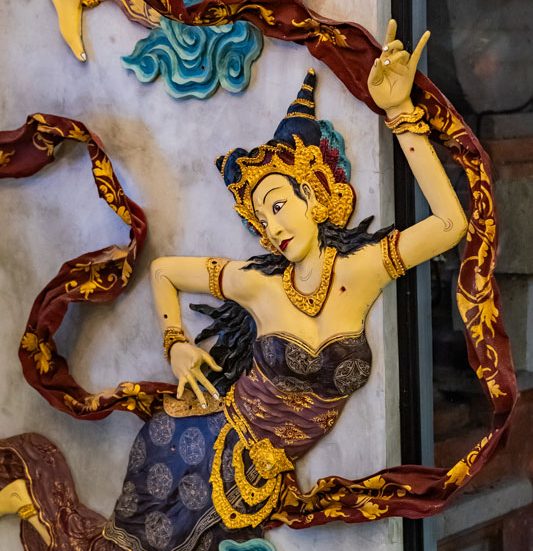
One of the most striking aspects of the architecture is the presence of traditional reliefs and sculptures. Figures adorned with golden jewelry, flowing garments, and celestial motifs are inspired by Hindu‑Buddhist traditions. These artworks are not only decorative but carry cultural meaning, symbolizing spirituality, balance, and movement. The vibrant colors — gold, purple, and blue — bring energy to the space, while the detailed craftsmanship reflects the depth of Balinese artistry.
Pavilion and Temple Elements
The restaurant integrates pavilion‑style structures, echoing the design of Balinese family compounds. Small temple ornaments and shrines are part of the layout, reminding guests of the spiritual dimension that is inseparable from everyday life in Bali. These elements are subtle yet significant, offering cultural context without overwhelming the dining experience.
Atmosphere and Flow
The architecture encourages a natural flow between dining and cultural appreciation. Open spaces allow light to filter in, while greenery surrounds the seating area, making the environment calm and refreshing. The reliefs and sculptures add a sense of movement, as if the figures are part of the living space, connecting guests with the artistic heritage of the island.
Reflection
Overall, the architecture of Natah Ubud Restaurant is about balance: between rustic simplicity and cultural richness, between dining and spirituality. It creates a space where guests can enjoy food while being immersed in Balinese tradition. The design does not rely on grandeur, but on authenticity — making the restaurant feel both welcoming and meaningful.